
Automatic Water Sprinkler Systems
Falcon Power supplies Wet Pipe and Dry Pipe Sprinkler Systems for buildings and facilities that require automatic water-based fire protection.
Available Automatic Sprinkler Systems
The main selection depends on whether the protected area can keep water inside the pipes safely, or requires compressed air or nitrogen because of low-temperature conditions.
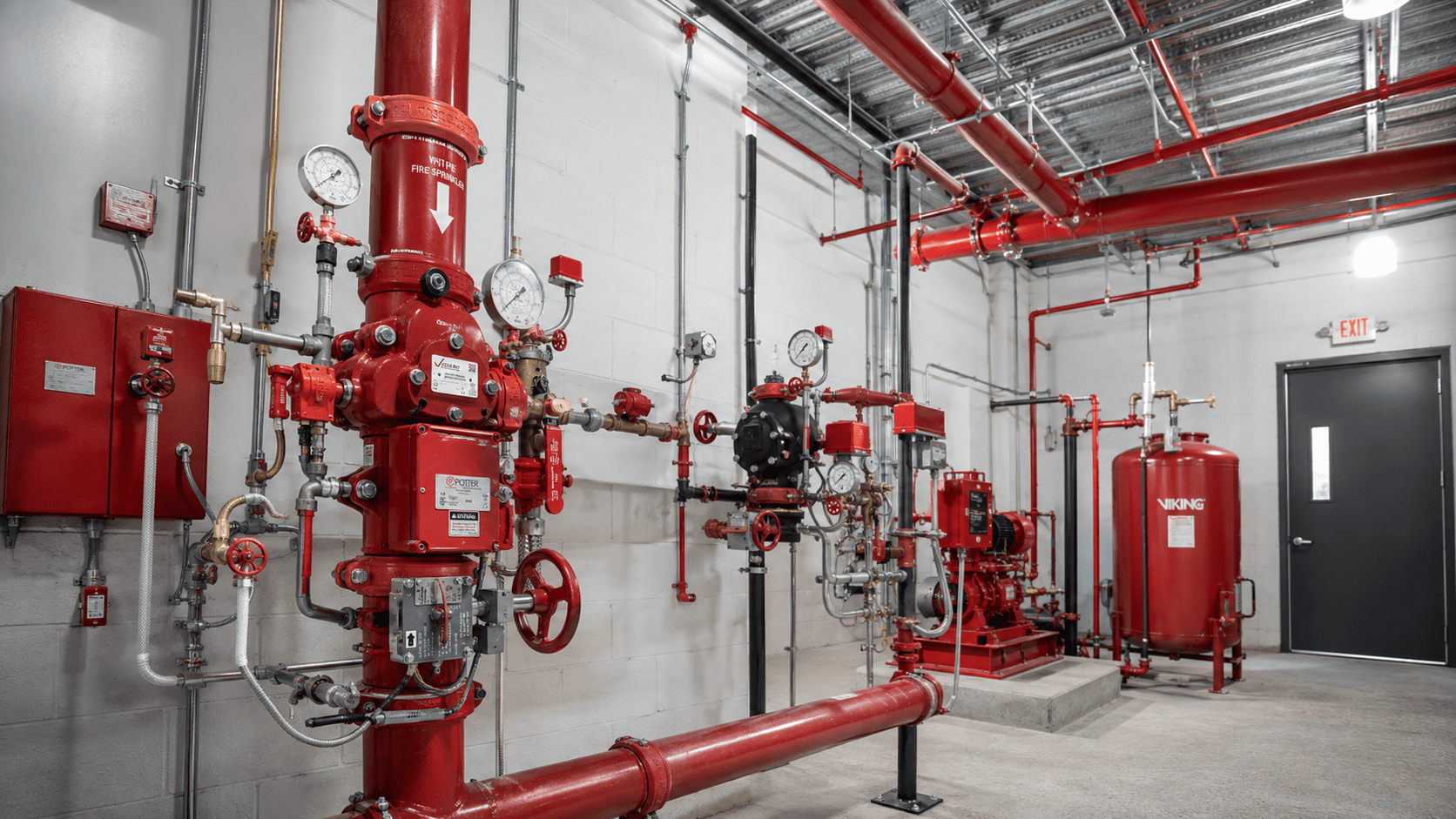
Wet Pipe Sprinkler System
A Wet Pipe Sprinkler System is connected to water through the pipe network. Sprinklers are installed along the pipes and activate automatically when the surrounding temperature reaches the sprinkler’s rated activation point.
- Used where water can remain inside the pipes safely
- Each sprinkler activates separately when exposed to enough heat
- Common temperature ratings include 68°C, 73°C, 93°C, and other ratings based on requirement
- Many sprinkler heads discharge around 20–25 gallons per minute
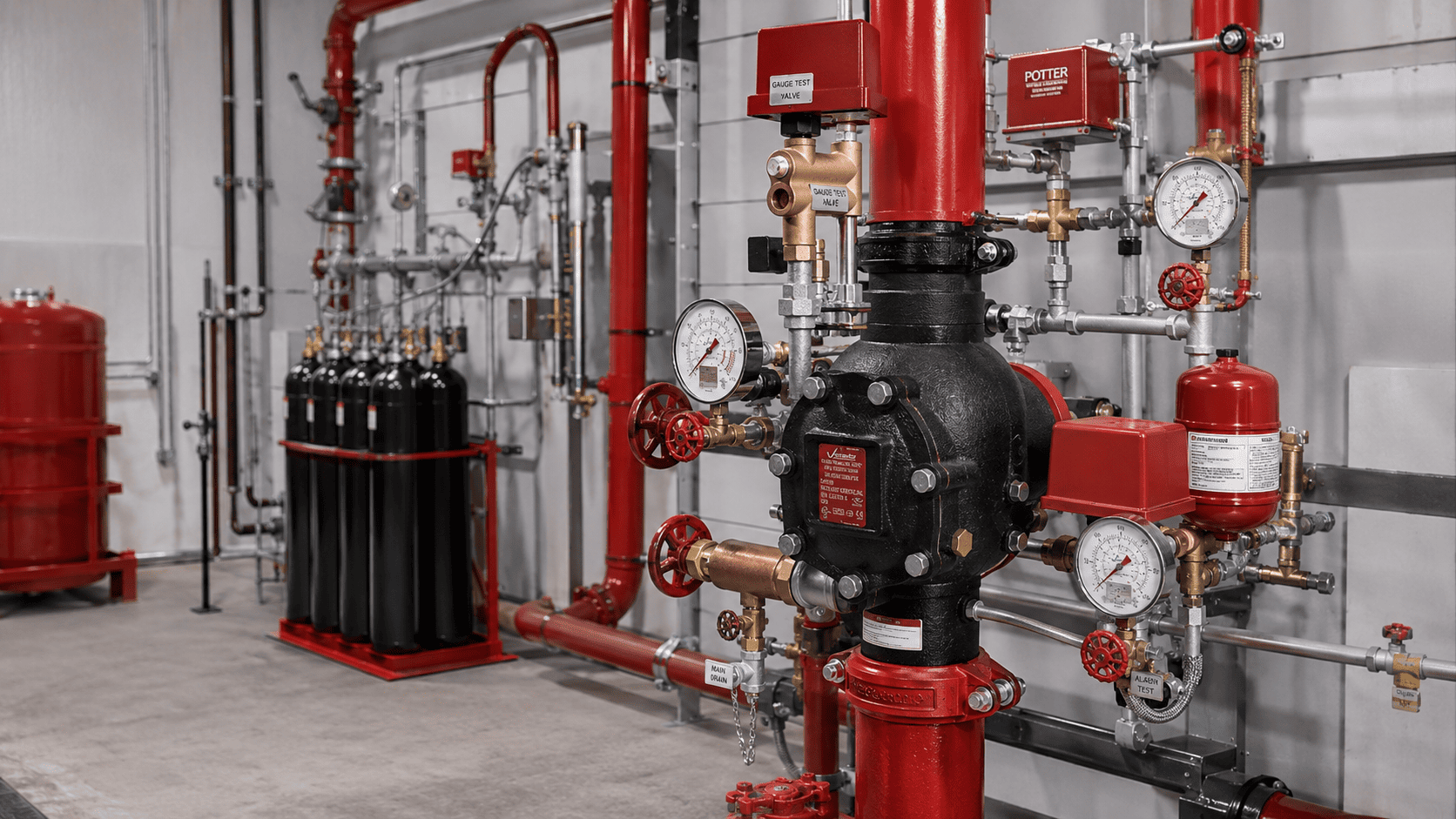
Dry Pipe Sprinkler System
A Dry Pipe Sprinkler System is filled with compressed air or nitrogen. When heat from a fire opens the sprinkler, the air is released and water flows into the pipe network to discharge through the open sprinkler.
- Used in areas where wet pipe systems are difficult to install
- Suitable for locations exposed to freezing temperatures
- Water is held back until sprinkler activation releases air pressure
- Commonly selected for colder or special-condition areas
Wet Pipe or Dry Pipe: which system fits the project?
Both systems work automatically, but the pipe condition and installation environment are different.
Water in Pipes
Wet pipe systems keep water inside the pipes. Dry pipe systems keep air or nitrogen inside the pipes until activation.
Temperature Conditions
Wet pipe systems are suitable for normal temperature areas. Dry pipe systems are used where freezing risk exists.
Activation Method
Both activate by heat at the sprinkler head, but dry pipe systems release air first before water reaches the open sprinkler.
What clients should confirm before requesting sprinkler systems.
To check the suitable sprinkler system, share the building type, area use, ceiling height, temperature conditions, drawings, and project specifications.
Need Automatic Water Sprinkler System details?
Send the system type, project drawings, protected area details, and project location to Falcon Power to check the suitable sprinkler solution.